Job sheets
Platinum, gold and silver variants, each drawing its own jobcard series from an atomic per-material, per-fiscal-year counter.
A single-tenant ERP for a Kolkata jewellery manufacturer. Job sheets, packaging and diamond sheets, and an append-only inventory ledger - with exports that mirror the operator's paper form field-for-field.
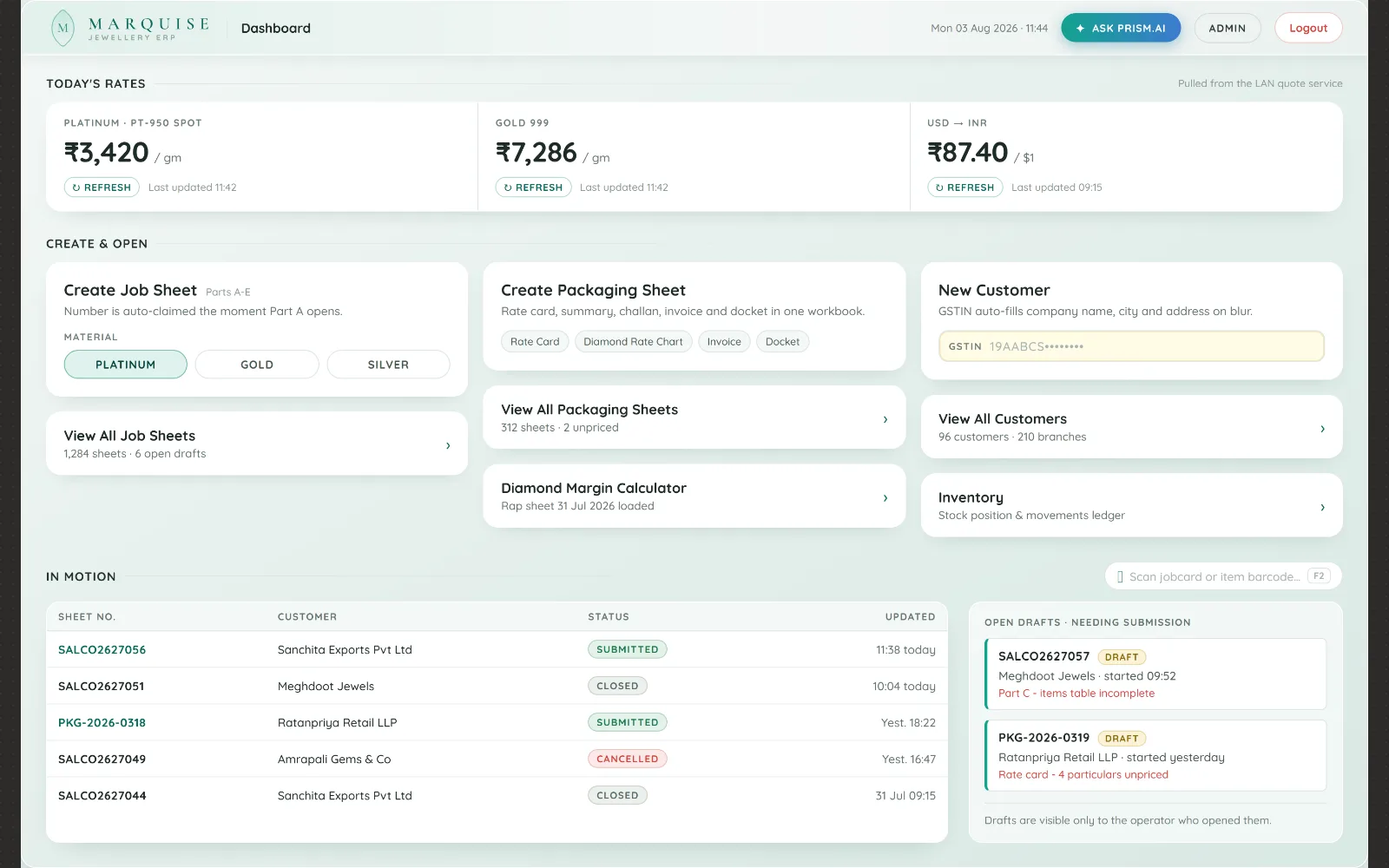
ShreeKunj ran manufacturing on paper job sheets and spreadsheet rate cards. Marquise moves both into one system without asking the floor to relearn its own paperwork: the PDF and Excel it prints match the original form line for line. Underneath, every write is diffed field by field into an append-only audit log, and rates that used to be typed from memory are pulled live.
Platinum, gold and silver variants, each drawing its own jobcard series from an atomic per-material, per-fiscal-year counter.
Two rate streams behind one form - a platinum sales rate card and a purchase packing sheet that lands imported metal cost through duty to wastage.
Per-stone records with certificate and inscription capture, exported as an A3 landscape sheet built for the bench, not the browser.
An append-only movements table. Stock is never stored - it is aggregated as inward minus outward, so the ledger and the position can't disagree.
Every update snapshots before and after and records a per-field diff, down to individual rows inside an item or diamond array.
A QR per sheet and a Code128 barcode per item, read by USB scanners on the floor. Emailed attachments are byte-identical to downloads.
// <PREFIX><FY><NNN> - SALCO2627055 is platinum #55, FY 2026-27.// The counter is claimed atomically per material, per fiscal year,// so two operators saving at once can never collide.function composeJobcardNo(prefix, fy, num) { return prefix + fy + String(num).padStart(3, '0')}// Dates are read in local time, never toISOString().slice(0,10)// - east of UTC that shifts the day and fabricates a diff.function normDate(d) { return d.getFullYear() + '-' + pad(d.getMonth() + 1) + '-' + pad(d.getDate())}// "2.000" and "2" collapse to the same value before comparing.Marquise replaced paper job sheets and spreadsheet rate cards with one system whose printed output the floor still recognises. A July 2026 migration loaded 131 sales packaging sheets and 35 diamond sheets through purpose-built importers, each dry-run before commit. Prism, the assistant layer, is built on the records this system keeps.